How to Specify a Cold Room: 9 Checks Before You Request a Quote
Most cold room projects do not go wrong because the equipment was bad. They go wrong because the specification was vague — and a vague specification is exactly what makes two quotations impossible to compare.
A supplier asked for "a 300 m² freezer room" has to guess at six or seven things. Some will guess generously and quote high; others will guess lean and quote low, then recover the margin through variation orders once the build starts. Neither helps you.
The fix is to spend an hour writing the specification before you send the enquiry. Below are the nine items that actually decide whether the room performs for ten years, written in the order a buyer should check them.
1. Product and target temperature — not just "frozen"
"Cold" is not a specification. State the product, the target storage temperature, and whether the room is for long-term storage or for throughput (loading and unloading several times a day).
| Product | Typical storage temperature | Notes |
|---|---|---|
| Fresh produce (apples, pears, leafy vegetables) | 0 °C to +4 °C | Stability matters more than capacity. Air distribution and humidity control decide shelf life. |
| Chilled food and dairy | 0 °C to +4 °C | Frequent door opening means an air curtain or buffer area pays back in energy. |
| Frozen meat and seafood | −18 °C to −20 °C | Insulation thickness and defrost strategy become the dominant cost drivers. |
| Blast / IQF freezing | −30 °C to −40 °C | Freezing capacity is sized per tonne per batch, not per square metre. |
| Pharmaceuticals and vaccines | +2 °C to +8 °C | Continuous temperature logging, alarms and qualification points are mandatory, not optional. |
| Controlled atmosphere (CA) storage | ≈ 0 °C with reduced O₂ | Air-tightness is a construction discipline, not a bolt-on accessory. |
If you store different products in one building, say so. Multi-temperature zones change the plant layout, the number of evaporators and the control strategy — and they are far cheaper to design in than to add later.
2. Insulation panel: thickness, density and facing — three separate decisions
Polyurethane (PU) sandwich panels are the default for good reason. But buyers tend to fixate on thickness and ignore the two parameters that determine whether the panel actually delivers it.
Thickness follows the temperature:
| Temperature range | Common panel thickness |
|---|---|
| Above 0 °C (fresh, CA) | 100 mm |
| −15 °C to −20 °C | 150 mm |
| −25 °C to −35 °C | 180–200 mm |
These are common engineering ranges, not recommendations. Final thickness comes from the heat load calculation and a condensation check — and ambient conditions matter. A room in a hot, humid coastal climate needs more insulation than the same room in a temperate one.
Density (core density, kg/m³) affects stiffness, thermal conductivity and long-term water absorption. In the 38–42 kg/m³ band is typical for cold room panels. A quotation that states thickness but not density is not comparable with one that states both — ask for density and fire rating (B1 difficult-to-ignite is the usual requirement) to be written into the contract annex.
Facing material should match the environment: colour-coated steel is fine in dry rooms; stainless steel or embossed aluminium is worth the premium in high-humidity rooms (fresh produce, seafood), where galvanised sheet will rust within a few years. Facing thickness (0.4 / 0.5 / 0.6 mm) is a genuine cost line and is often quietly reduced.
3. Condensing unit capacity must be quoted at an evaporating temperature
This is the single most common source of an undersized plant.
A unit's output is not a fixed number. The same machine delivers substantially less capacity at −25 °C evaporating than at −10 °C. A quotation that only says "10 HP" or "15 HP" tells you nothing.
Ask for capacity in kW at a stated evaporating temperature, and check it against your room's design load. Horsepower ratings are a purchasing shorthand, not an engineering specification.
Also worth stating up front: compressor type (reciprocating / scroll / screw), refrigerant, and whether the unit is a single machine or part of a parallel rack. For larger rooms, a rack gives part-load efficiency and redundancy — if one compressor fails, you do not lose the room.
4. Evaporators: fin spacing, air throw and defrost method
Fin spacing is chosen for the room, not for the catalogue:
- Wide fin spacing for low-temperature rooms — frost builds slowly and defrost intervals stay long.
- Narrow spacing in high-humidity fresh produce rooms risks rapid frosting, frequent defrost cycles and a room temperature that never settles.
Defrost method — electric, water or hot gas — should be stated explicitly. Electric is simplest and common; hot gas is more efficient at scale but costs more to install. Whichever is chosen, the defrost drain and its trace heating are what actually fail in service, and they are rarely in the quotation.
5. Doors, traffic and the loads nobody counts
State how many doors you need, their size, and how often they open. A dispatch bay that opens forty times a day has a very different heat load from a storage room opened twice — and the difference should be in the calculation, not discovered on the electricity bill.
For high-traffic rooms, an air curtain or a buffer vestibule costs more up front and saves it back in running cost. Strip curtains and dock shelters are worth specifying at the same time.
6. Floor: the most expensive thing to get wrong
For rooms below 0 °C, the floor needs frost-heave protection. Without it, ground beneath the slab freezes, expands and cracks the floor — and by then the room is built and the repair is structural.
If the site already has a slab, say whether it includes insulation and a vapour barrier. If it does not, floor insulation and heating (or a ventilated void) need to be in the scope, and this is one of the items most often excluded from a "complete" quotation.
7. Ask what is *not* included
Get the exclusions in writing before comparing prices. The usual seven:
- Civil works, floor slab, floor insulation and drainage
- Power supply to the plant room, cabling and cable trays
- Crane or forklift hire, and unloading at site
- Taxes, transport and packaging
- Water supply and drain connection for defrost
- Temperature monitoring, data logging and alarm system
- Warranty terms — unit, compressor, wearing parts, and stated response time
Ask three suppliers to re-quote against the same written list. The spread will narrow immediately, and the honest quotes will separate from the optimistic ones.
8. Verify the manufacturer, not the brochure
A cold room is a factory product assembled on site, so who actually makes the panels matters.
- In-house production. Ask whether the panels and doors are made in the supplier's own workshop or bought in. In-house production means core density, facing thickness and delivery dates are controlled rather than negotiated. A short video call from the panel line settles this faster than any certificate.
- Scope of certifications. ISO 9001 is only meaningful within its certified scope — a certificate covering "equipment sales" says little about manufacturing or installation quality. Ask to see the scope.
- Installation qualification. In China, cold storage installation qualifications are graded and numbered; the grade determines the project sizes the holder may legally undertake.
- Reference projects of your type. Ignore the total count. Ask for one project storing the same product, with volume, temperature zones, panel build-up and measured running cost — and preferably one that has been in service for two years or more. Thermal ageing and component failure rates do not show up in a new installation.
9. Running cost, not just capital cost
For a room with a ten-year design life, electricity usually exceeds the capital cost. Two things dominate it: insulation quality (item 2) and defrost strategy (item 4).
Ask the supplier for an estimated annual kWh based on your ambient conditions and door traffic. Any supplier who has done the load calculation can produce it. ⚠️ Insert your project's actual tariff and usage profile when comparing suppliers — a generic figure is only useful as a relative comparison.
Engineering tip: a slightly thicker panel raises the initial investment and lowers the running cost for the life of the room. The payback is usually a few years. Ask for both options priced — the difference is often smaller than expected.
What to send with your enquiry
Give a supplier these seven items and you will get a quotation you can actually compare:
- Product and storage temperature (or temperature zones)
- Dimensions: length × width × height, or total volume
- Estimated daily throughput and door opening frequency
- Site conditions: indoor or outdoor, ambient range, available power
- Floor condition: existing slab with insulation, or to be built
- Required completion date
- Whether temperature monitoring and alarm logging are required
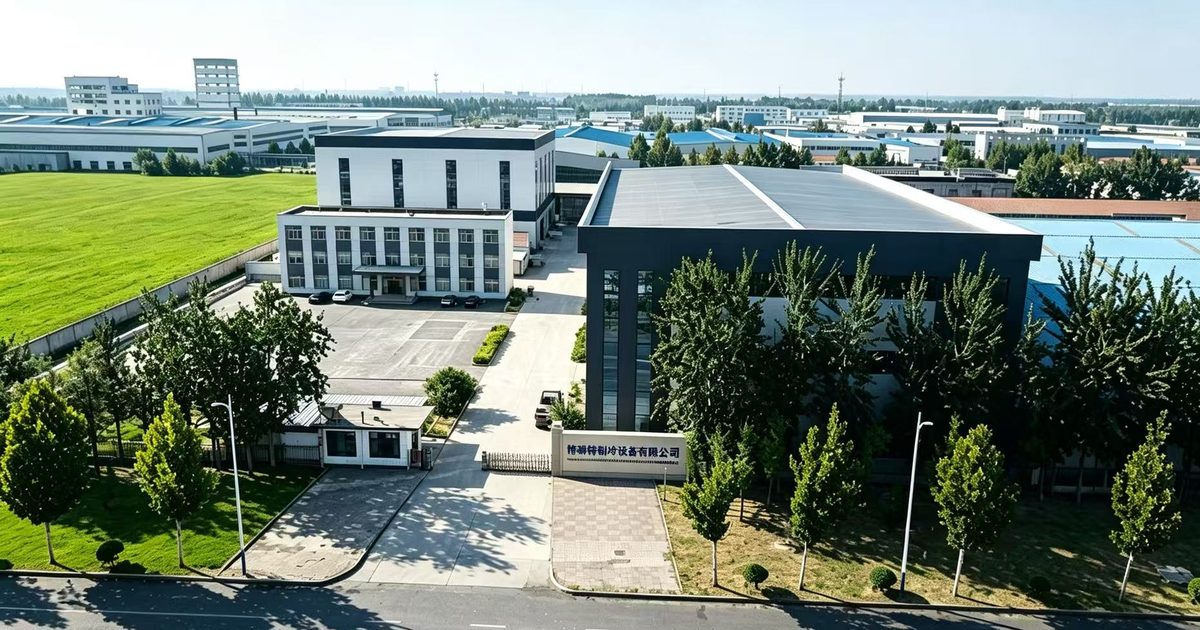
About this article. Written by the engineering team at Shandong Boruite Refrigeration, a cold room manufacturer in Boxing County, Binzhou, Shandong, China. We produce PU insulation panels and cold room doors in our own workshop and undertake design, equipment supply, installation and after-sales service.
Send the seven items above to 3107900547@qq.com or call +86 15898896999 and an engineer will come back with a preliminary scheme and budget range within 24 hours. Factory visits can be arranged with one day's notice.
*The temperature ranges, panel thicknesses and densities in this article are common engineering reference values. Final values must be calculated against your project's actual conditions.*
Send us the product, storage volume, target temperature and site conditions — our engineers will come back with a preliminary scheme and budget range within 24 hours.
Email us 15898896999