How to Import Cold Room Equipment from China: A Buyer's Checklist
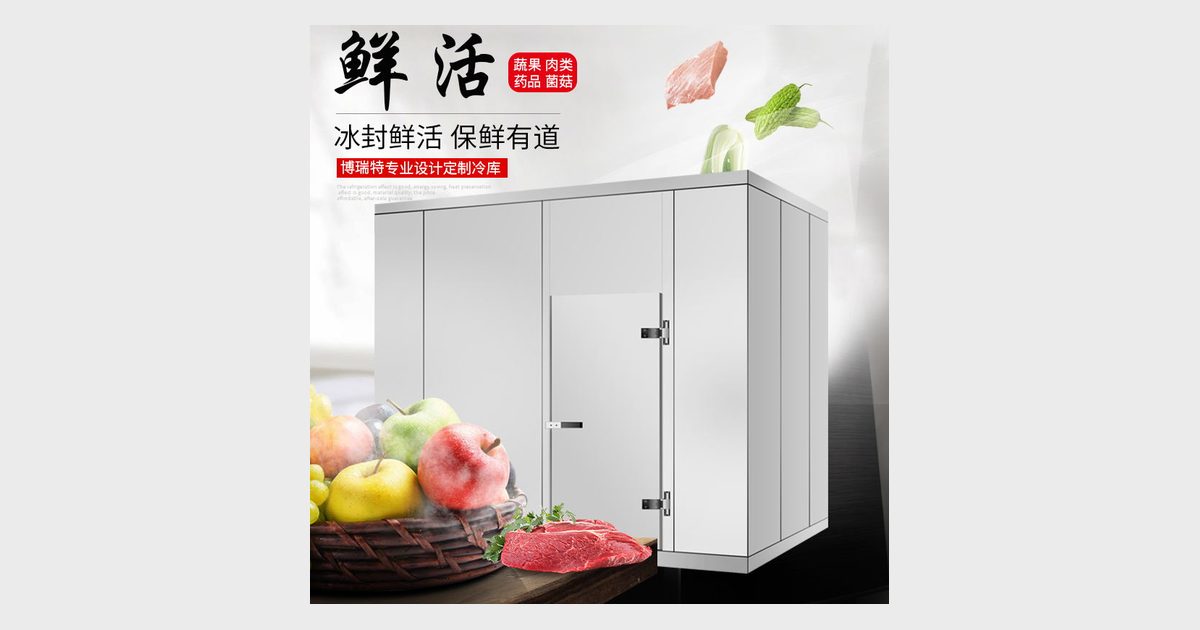
The equipment price is rarely what surprises first-time importers of cold room equipment. What surprises them is everything between the factory gate and a room running at temperature — freight, packing, refrigerant rules, electrical compatibility, and the question of who actually bolts the room together once the container lands.
This article covers that middle section. If you have not yet written your specification, read *How to Specify a Cold Room: 9 Checks Before You Request a Quote* first — every number below depends on having a defined spec.
1. What actually gets shipped
A cold room is not one product. It is a kit of parts that arrives in one or more containers, and knowing the split helps you plan storage and installation labour.
| Component | Typically shipped | Notes |
|---|---|---|
| PU / PIR sandwich panels | Flat-packed, palletised or crated | Cam-lock panels are the export default — they assemble without foaming on site. |
| Cold room doors | Crated, with frame and hardware | Heated frames and gaskets should be packed separately from sharp hardware. |
| Condensing units | Crated, on pallets | Check whether refrigerant is charged at the factory or on site — this changes customs handling. |
| Evaporators / air coolers | Crated | Coil fins are the most commonly damaged item in transit. |
| Copper piping, valves, refrigerant | Boxed | Often the first thing to go missing in a partial shipment. |
| Electrical panel and controls | Crated | Voltage and frequency must be confirmed before production. |
| Fixings, sealant, trim | Boxed | Small parts are cheap to buy and expensive to wait for. |
Engineering tip: Ask for the packing list to be sent *before* shipment, cross-referenced against the quotation line by line. A missing box of cam-lock keys or door gaskets has stopped more installations than any equipment failure.
2. Lead time: where the weeks actually go
Lead time is not production time. A realistic breakdown looks like this:
| Stage | Typical duration | What moves it |
|---|---|---|
| Drawing approval and technical confirmation | 3–10 working days | Slowest when the buyer's spec is incomplete. |
| Production | 15–30 working days | Panel thickness, door count, custom sizes and non-standard units. |
| Packing and container loading | 3–7 days | Export packing (wood treatment, fumigation) takes longer than buyers expect. |
| Inland transport to port | 2–5 days | Factory location relative to the loading port. |
| Sea freight | 15–45 days | Route, transhipment, season. |
| Customs clearance and delivery | 5–15 days | Documentation accuracy, local port efficiency. |
⚠️ Replace with your actual quotation. These are general planning ranges, not commitments. Air freight is possible for small control components but is rarely viable for panels — volume, not weight, is the constraint.
3. Packing and container loading
Panels are long, light and vulnerable to edge damage; units are dense and vulnerable to tipping.
- Ask how panels are protected at the edges. Corner damage on a cam-lock panel can make it unsealable.
- Confirm whether the container is loaded at the factory or at a consolidation warehouse. Factory loading reduces handling.
- Ask for loading photos before the container is sealed. Reputable suppliers provide them routinely.
- Wood packaging must comply with ISPM 15 (heat treatment or fumigation, with the mark stamped). Non-compliant pallets can hold a whole container at customs.
4. Refrigerant: the compliance item that catches people out
Refrigerant rules are national, not universal, and they change. A unit that ships legally to one country may be non-compliant in another.
- Confirm the refrigerant type before production, not after. Changing it later means a different compressor and possibly different piping.
- Some destinations restrict factory-charged refrigerant or require certified handling at import. Ask your supplier whether units ship charged or dry.
- Check the destination country's current rules. For the United States, this includes EPA SNAP requirements; for the EU, F-Gas regulations. Treat any statement about compliance as something your own customs broker or a local refrigerant specialist must confirm for your specific shipment.
Engineering tip: Put the refrigerant type, the charge quantity per unit, and whether units ship charged into the proforma invoice. It makes customs classification and your broker's job much simpler, and it prevents a nasty surprise at the border.
5. Electrical compatibility: confirm before production, not after
China builds to 380 V / 50 Hz as standard. Many destinations are 60 Hz, and some are 220 V or 415 V.
- State your supply voltage and frequency explicitly in the technical specification — phase, voltage, and frequency.
- 60 Hz operation changes motor speed and, on some designs, the unit's actual capacity at your conditions.
- Control panels may need different components (contactors, breakers, transformers) for your supply. This is far cheaper to build in than to retrofit.
- Certification marks: for the US market, UL or ETL listing is commonly expected by inspectors and insurers. This is a project requirement to raise at the quotation stage — do not assume a supplier's standard build carries it.
6. HS codes and duties
Import duty depends on the destination country's tariff classification, and cold room kits can be classified in more than one way depending on how complete the shipment is.
- The applicable HS code varies by country and by how the shipment is declared (panels, refrigeration units, and complete cold rooms can fall under different headings).
- Have your customs broker confirm the code before shipment, using the packing list and product descriptions.
- Ask the supplier for a detailed commercial invoice with component-level descriptions; a single line reading "cold room" invites the widest possible interpretation by customs.
⚠️ Do not rely on a supplier's suggestion as authoritative. Duty rates and classification are decided by your customs authority, not by the factory.
7. Inspection and payment terms
Standard practice varies, but the checks that protect you are consistent:
| Check | Why it matters |
|---|---|
| Pre-shipment inspection (your agent or a third party) | Confirms quantity, model numbers, panel thickness and facing before the container seals. |
| Panel thickness and density verification | The easiest specification to quietly downgrade. Measure it. |
| Unit nameplate photo | Confirms model, refrigerant, voltage and frequency match the order. |
| Running test where possible | At minimum, a factory run test on the condensing unit. |
| Loading photos | Evidence of packing quality and completeness. |
Common payment structures include a deposit with balance against bill of lading, or deposit with balance after inspection. Whatever the split, tie the final payment to something you can verify — an inspection report or a shipping document — rather than to a date.
8. Who installs it on arrival
This is where import projects most often stall. A container of panels is not a cold room.
Decide early which of these applies:
- Your own team, with remote commissioning support from the supplier (drawings, wiring diagrams, video calls).
- A local refrigeration contractor you appoint yourself.
- A technician sent from the supplier — usually possible, but plan for visa lead time, travel cost and the fact that the technician's time on site is limited.
Whichever route you choose, ask the supplier in advance for: assembly drawings with panel numbering, a wiring diagram, a commissioning procedure, and a startup checklist. Projects that go smoothly are the ones where these documents were agreed before shipment.
9. Landed cost: build the full table
When comparing quotations from different countries, compare landed cost, not ex-works price:
| Line item | Notes |
|---|---|
| Equipment (ex-works or FOB) | Confirm Incoterms — this changes who pays what. |
| Export packing and inland haulage | Sometimes included, often not. |
| Sea freight | Quoted per container, varies by season and route. |
| Marine insurance | Usually a small percentage of cargo value. |
| Import duty and taxes | Depends on classification and destination. |
| Port charges and customs clearance | Local, and easy to underestimate. |
| Inland delivery to site | Distance from port to site. |
| Installation labour and local materials | Often comparable to the equipment cost itself. |
| Commissioning and refrigerant charge (if shipped dry) | Requires a certified local technician. |
⚠️ Replace with your actual quotation. No price figures are given here deliberately — freight rates, duties and labour vary too much by country and season for any published number to be useful, and a wrong budget number is worse than none.
10. Questions worth asking a supplier before you commit
- Have you exported to my country before? Can you name the port and give a reference?
- Will you provide ISPM 15 compliant packing, a detailed packing list, and loading photos?
- Do units ship charged with refrigerant, or dry? Which refrigerant?
- Can you build to my voltage and frequency, and do you have the relevant certification for my market?
- What documents come with the shipment — drawings, manuals, wiring diagrams, commissioning procedure, spare parts list?
- What is covered by warranty, and how are claims handled across borders?
- Who provides commissioning support, and is it included or chargeable?
A supplier who answers all seven crisply, in writing, is usually a supplier whose shipment will match the quotation.
Summary
Importing cold room equipment is not difficult, but it is a logistics and compliance exercise as much as a purchasing one. The four things that decide whether it goes smoothly: a written specification, refrigerant and electrical compatibility confirmed *before* production, packing and documentation verified *before* shipment, and a clear answer to who installs and commissions the room on arrival.
*Shandong Boruite Refrigeration Equipment Co., Ltd. manufactures PU insulation panels and cold room doors at its own workshop in Boxing County, Binzhou, Shandong, and undertakes design, equipment supply, installation and after-sales service. Enquiries: +86 15898896999 · 3107900547@qq.com*
*Figures in this article are general industry planning ranges. Lead times, freight, duties and compliance requirements must be confirmed for your specific route and destination.*
Send us the product, storage volume, target temperature and site conditions — our engineers will come back with a preliminary scheme and budget range within 24 hours.
Email us 15898896999