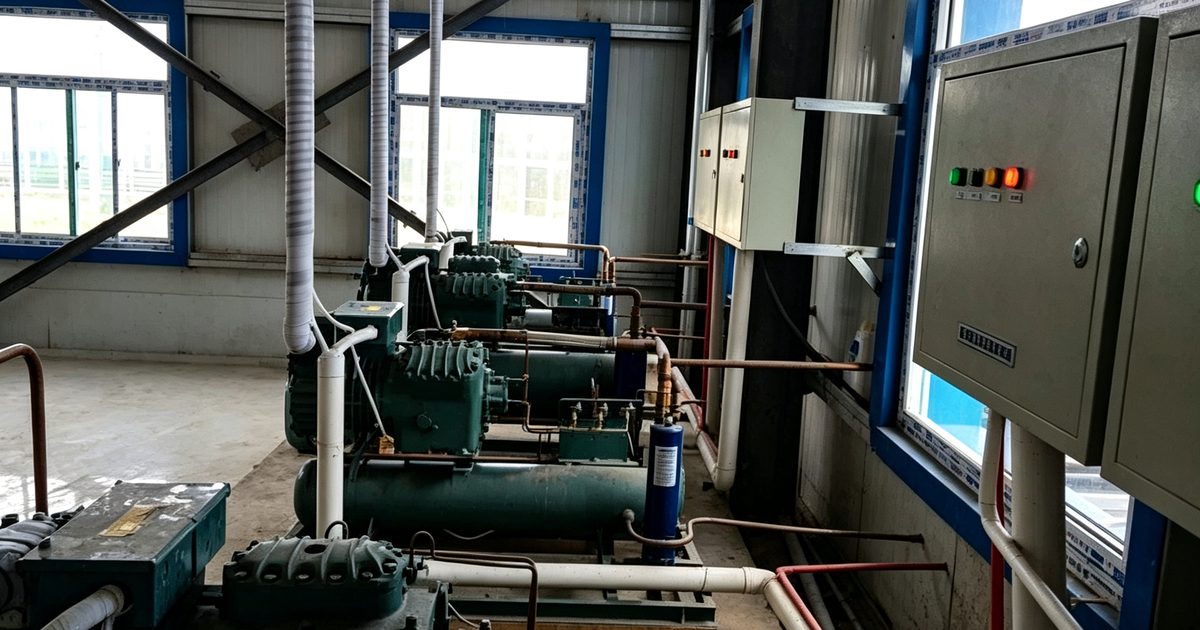
气调冷库的四大子系统与关键技术参数
The Four Sub-Systems of a CA Cold Store and Their Key Parameters
发布日期 / Published:2026-09-25 | 作者 / Source:博瑞特制冷工程技术部
气调冷库系统、气调冷库设备厂家B2B Insights
很多客户第一次接触气调保鲜时,会把它理解成"加了氮气设备的冷库"。实际上,一座能稳定达标运行的气调冷库,是由四个高度耦合的子系统构成的:气密围护是前提,制冷是基础,气体调控是核心,安全与自控是保障。任何一环短板,都会让整套系统的投资回报打折扣。
一、气密围护系统:看不见却最要命
气调库的本质是"把一屋子空气的配方锁住若干月"。因此它比普通冷库多了一层气密构造,通常包括:
- 库体气密层:夹芯板搭接处现场密封、局部喷涂气密涂料,或增设整体气密膜(气密帐)。三种做法的成本、寿命与可维护性差别很大,需要结合库房尺寸与改造预算确定。
- 气密门与观察窗:专用气密门配多道密封条,观察窗采用双层中空结构并预留取样口。
- 穿堂管线的气密节点:制冷管路、电缆、传感器线束的穿墙套管,是实际工程中最常见的漏气点。
- 压力平衡装置(泄压阀/呼吸袋):库内温度波动会造成正负压力变化,没有泄压保护,库体可能被吸瘪或鼓裂。
按 SBJ 16《气调冷藏库设计规范》,库房气密性须在封库后按标准方法检测;GB/T 47156-2026《苹果气调贮藏技术》进一步将入库前的气密性检测列为强制环节。检测不合格就入库,是气调库最常见的失败起点。
二、制冷系统:气调库要的是"稳",不是"猛"
与普通冷冻库追求快速降温不同,气调库追求长期小温差、低风速运行,以减少果蔬失水(失重)和干耗。这直接决定了设备配置:
| 配置项 |
气调/保鲜工况倾向 |
说明 |
| 冷风机翅片间距 | 4.5 mm 左右(0℃上下工况) | 片距过小易堵霜,过大会损失换热面积 |
| 蒸发温度与库温差 | 通常控制在 6~8 K | 温差过大→出风温度低→货物失水快 |
| 库内风速 | 低风速、远距离送风 | 避免局部冻伤与干耗 |
| 融霜方式 | 电热融霜 / 水冲霜按规格选 | 融霜带来的温升需控制在 1℃ 以内 |
| 机组形式 | 多机头并联或变频,部分负荷效率高 | 气调库常年部分负荷运行,卸载能力很重要 |
具体型号如何对应库容与工况,可参考本站《冷风机设备选型指南》。
三、气体调控系统:三台核心设备
气调的核心是把 O₂降下来、把多余的 CO₂脱掉、把乙烯清除干净,对应三类设备:
- 降氧设备(制氮机 / 燃烧式降氧机):中空纤维膜或碳分子筛制氮机应用最广,通过向库内充注氮气把 O₂从 21% 降至目标区间;燃烧式降氧速度快,适合大库快速封库。
- 二氧化碳洗涤器(脱碳机):果蔬呼吸会持续产生 CO₂,超过上限会造成二氧化碳伤害(果皮凹陷、褐斑),需用活性炭吸附或化学吸收方式维持在目标区间。
- 乙烯脱除装置:乙烯是催熟激素,GB/T 47156-2026 给出的管理目标是使库内乙烯浓度控制在 1 μL/L 以下,通常采用高锰酸钾载体氧化或高温催化分解。
三者都应有冗余:单点故障不应导致整库气体失控。
四、主要品类的推荐参数区间
下表为常见品类的典型气调贮藏参数范围,整理自 GB/T 47156-2026 及行业通行做法,实际方案须按品种、产地、成熟度做小批量验证后确定。
| 品类 |
温度 |
相对湿度 |
O₂ |
CO₂ |
参考贮藏期 |
| 苹果(富士系) | -1~-0.5℃ | 90%~95% | 2%~3% | 0%~1% | 8~10 个月 |
| 苹果(元帅系) | 0~1℃ | 90%~95% | 1.5%~2% | 1.5%~2.5% | 5~7 个月 |
| 苹果(金冠系) | 0~1℃ | 90%~95% | 2%~3% | 6%~8%(偏高耐受) | 4~6 个月 |
| 梨 | 0~1℃ | 90%~95% | 2%~3% | 0%~1% | 5~8 个月 |
| 猕猴桃 | 0~1℃ | ≥95% | 2%~3% | 3%~5% | 3~5 个月 |
注:金冠系对 CO₂的耐受度明显高于富士,这正是标准强调"因品种施策"的原因。用一套参数管所有库,是新手最常犯的错误。
五、入库前的三道关键工序
- 预冷:采后尽快启动预冷,GB/T 47156-2026 要求采后 24 小时内进入预冷、48 小时内将果心温度降至接近贮藏温度。带着"田间热"直接入库,会让制冷负荷翻倍,还会造成大量结露。
- 梯度降温:按标准给出的梯度逐步逼近贮藏温度,避免骤冷引发生理病害。
- 堆码密度与风道:实践中常控制在 200~220 kg/m³ 左右并留有风道,垛间、箱间留通道保证气流均匀,避免局部死角。
六、安全:低氧环境的红线
气调库内氧含量常年低于 10%,属于受限空间作业风险区。管理上必须落实:
- 设置醒目警示标识,未经排风换气与氧气检测禁止入库;
- 至少两人同行并佩戴氧气呼吸器;
- 定期校验安全阀(呼吸袋/泄压阀)与氧气报警仪;
- 作业人员经专项培训并考核合格后上岗。
这些要求在 GB/T 47156-2026 的安全管理条款中均有体现,也是我们在项目交付培训中反复强调的内容。
山东博瑞特制冷设备有限公司成立于 2013 年,提供气调库、保鲜库、冷冻冷藏库、医药冷库与工业冷库的整体解决方案,涵盖方案设计、制冷设备、安装施工与售后维保,累计交付工程案例 1000 余项,24 小时售后响应。
官网:https://www.sdbrt.com | 咨询电话:15898896999
本文参数引自 GB/T 47156-2026《苹果气调贮藏技术》、SBJ 16《气调冷藏库设计规范》等公开标准,仅供方案前期评估参考,具体设计以正式图纸与技术协议为准。
需要冷库方案与报价?Need a cold-storage proposal?
山东博瑞特制冷设备有限公司:冷库工程设计、制冷设备供应、安装施工与售后维保一站式服务,13 年行业经验、1000+ 工程案例、24 小时响应。
Shandong Boruite Refrigeration — design, equipment, installation and service since 2013, 1000+ projects, 24h response.
sdbrt.com 官网
15898896999
(English version)
First-time buyers often assume a CA store is simply "a cold room with a nitrogen machine attached". In reality, a controlled atmosphere cold store that performs reliably season after season consists of four tightly coupled sub-systems: an airtight envelope as the prerequisite, refrigeration as the foundation, gas control as the core, and safety plus automation as the guarantee.
1. Airtight envelope: invisible but decisive
CA storage means locking a specific air recipe inside a room for months. Hence the extra sealing layer:
- Envelope sealing: joint sealing of sandwich panels, on-site sprayed airtight coating, or a purpose-made gas-tight membrane. Cost, service life and repairability differ substantially.
- Airtight doors and inspection windows: multi-gasket doors, double-glazed windows with sampling ports.
- Penetration details for refrigerant pipes, cables and sensor harnesses — statistically the most frequent leak locations.
- Pressure-relief devices (breather bags / relief valves): temperature swings create positive and negative pressure; without protection the structure can be crushed or burst.
SBJ 16 requires tightness testing after sealing, and GB/T 47156-2026 makes pre-loading tightness verification mandatory. Starting the season without a passed test is the most common root cause of CA failure.
2. Refrigeration: CA needs stability, not brutality
Unlike blast freezers, CA rooms run at low air velocity and small temperature difference to minimise moisture loss and weight shrink:
| Item |
Typical CA / fresh-keeping duty |
Note |
| Fin spacing | Around 4.5 mm (near 0 °C rooms) | Too tight → frost blocking; too wide → lost surface area |
| Evaporating vs. room ΔT | Typically 6–8 K | Large ΔT means colder air discharge and faster dehydration |
| Room air velocity | Low velocity, long throw | Prevents local chilling injury and drying |
| Defrost | Electric heater or water, by size | Keep defrost temperature rise below 1 °C |
| Compressor setup | Multi-compressor rack or inverter | CA runs at partial load most of the year |
See our Air Cooler Selection Guide for matching models to room volume and duty.
3. Gas control: three core machines
- Oxygen reduction: hollow-fibre membrane or carbon molecular sieve nitrogen generators are the mainstream; combustion-type units pull O₂ down faster, useful for rapid sealing of large rooms.
- CO₂ scrubber: products respire continuously; excess CO₂ causes injury (sunken skin, brown spots). Activated carbon or chemical absorption keeps levels in band.
- Ethylene removal: GB/T 47156-2026 sets the management target below 1 μL/L, typically via potassium permanganate carriers or high-temperature catalytic decomposition.
Redundancy matters for all three — a single point of failure must not mean a room full of fruit goes out of control.
4. Typical parameter bands by product
| Product |
Temperature |
RH |
O₂ |
CO₂ |
Typical storage life |
| Apple (Fuji type) | -1 to -0.5 °C | 90–95% | 2–3% | 0–1% | 8–10 months |
| Apple (Delicious type) | 0 to 1 °C | 90–95% | 1.5–2% | 1.5–2.5% | 5–7 months |
| Apple (Golden Delicious) | 0 to 1 °C | 90–95% | 2–3% | 6–8% (higher tolerance) | 4–6 months |
| Pear | 0 to 1 °C | 90–95% | 2–3% | 0–1% | 5–8 months |
| Kiwifruit | 0 to 1 °C | ≥95% | 2–3% | 3–5% | 3–5 months |
Golden Delicious tolerates far higher CO₂ than Fuji — a clear illustration of why one recipe cannot serve every room. Always validate with a small trial batch.
5. Three steps before loading
- Pre-cooling: start within 24 hours of harvest; bring core temperature close to the storage setpoint within 48 hours per GB/T 47156-2026. Field heat doubles the refrigeration load and causes heavy condensation.
- Step-down cooling: approach setpoint in stages to avoid physiological disorders.
- Loading density and airflow: practical values around 200–220 kg/m³ with clear flues between stacks.
6. Safety: the low-oxygen red line
With oxygen permanently below 10%, a CA room is a confined-space hazard. Mandatory practice:
- Warning signage; no entry without ventilation and oxygen measurement;
- Minimum two persons together, wearing oxygen respirators;
- Periodic calibration of relief devices and oxygen alarms;
- Operators trained and assessed before working.
Shandong BRT Refrigeration Equipment Co., Ltd. (山东博瑞特制冷设备有限公司), founded in 2013, provides complete solutions for CA storage, fresh-keeping stores, freezer rooms, pharmaceutical and industrial cold stores — covering design, refrigeration equipment, installation and maintenance, with 1,000+ delivered projects and 24-hour after-sales response.
Website: https://www.sdbrt.com | Tel / WhatsApp: +86 15898896999
Parameters cited from GB/T 47156-2026 and SBJ 16; for feasibility assessment only. Final values follow the approved drawings and technical agreement.
需要冷库方案与报价?Need a cold-storage proposal?
山东博瑞特制冷设备有限公司:冷库工程设计、制冷设备供应、安装施工与售后维保一站式服务,13 年行业经验、1000+ 工程案例、24 小时响应。
Shandong Boruite Refrigeration — design, equipment, installation and service since 2013, 1000+ projects, 24h response.
sdbrt.com 官网
15898896999