Blast Freezer Room Design and IQF Freezer Room: A Buyer's Engineering Guide
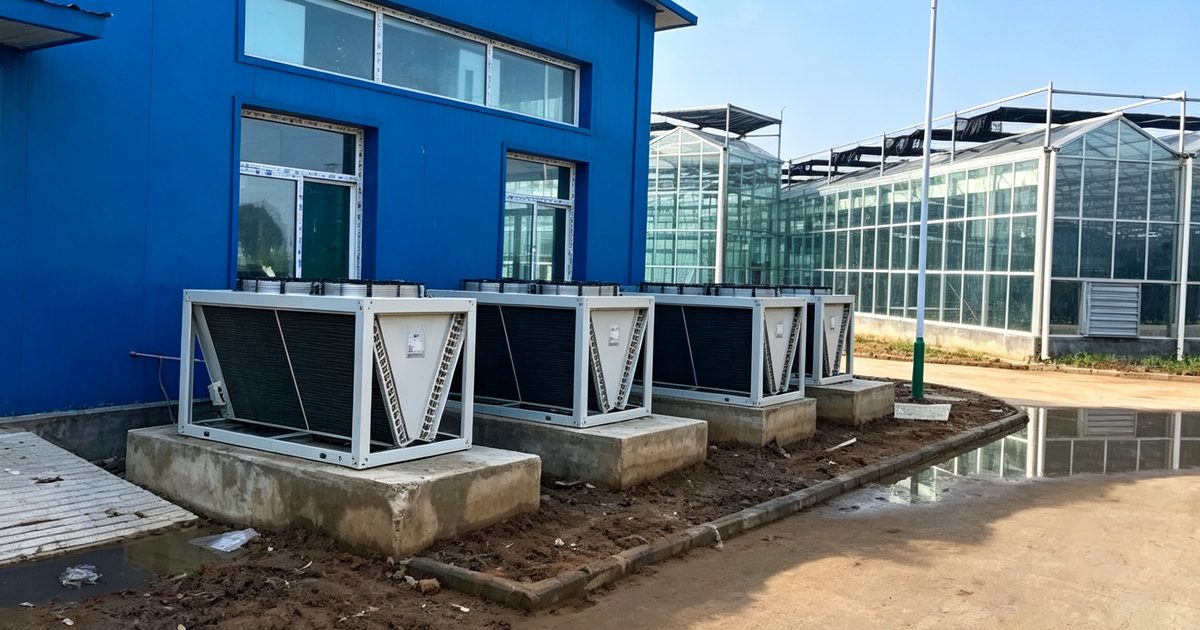
A blast freezer room is not a colder version of a normal cold room. It is a heat-removal machine sized to pull a large amount of product heat out in a short time. Design it like a storage freezer and the room will miss throughput, product will arrive partially thawed, and energy bills will be higher than necessary.
This guide explains what makes blast freezer room design different from ordinary cold storage, how IQF rooms fit in, and the engineering inputs buyers should have ready before asking for a quote.
The difference between blast freezing, IQF and normal frozen storage
The terms are often used loosely, but the equipment and room requirements are different.
| Function | Typical room temperature | Product state | Core task | Air velocity inside the room |
|---|---|---|---|---|
| Cold storage | –18 °C to –25 °C | Already frozen | Keep product frozen | Low, usually 0.3–1.0 m/s |
| Blast freezer | –30 °C to –40 °C | Fresh or chilled | Freeze product to target core temperature fast | High, usually 3–8 m/s |
| IQF freezer | –30 °C to –45 °C | Individual small pieces | Freeze each piece separately and quickly | Very high, often 4–10 m/s |
Blast freezing is about removing latent heat quickly. Most food products pass through a zone around –1 °C to –5 °C where ice crystals form. Faster passage means smaller crystals and better texture after thawing. That is why airflow and evaporating temperature matter more than the thermostat reading.
IQF is a special case of blast freezing. Product is spread on a conveyor or fluidised bed so cold air passes around each piece. A true IQF line is usually a tunnel or spiral machine, but many buyers also use "IQF freezer room" for a blast cell handling small, individually packed items.
Engineering tip: Ask your supplier whether "blast freezer" means a room that freezes cartons on pallets, a trolley-based batch cell, or an IQF tunnel. The refrigeration load, floor layout and handling equipment change completely between the three.
Design inputs a supplier cannot guess
Before any useful sizing can be done, the supplier needs seven facts. Missing any of them means the quotation is built on assumptions that may not match reality.
- Product type and incoming temperature. Meat, fish, vegetables and baked goods have different specific heat and freezing points. Product entering at +10 °C needs roughly twice the cooling of product entering at +4 °C.
- Target core temperature and freezing time. –18 °C core in four hours needs much larger equipment than the same target in 24 hours.
- Batch weight or hourly throughput. Batch systems are sized per cycle; continuous systems are sized per hour.
- Packaging. Cartons insulate and slow freezing; trays, baskets or open belts allow faster heat transfer.
- Loading pattern. Pallets, trolleys and hanging rails each create a different airflow path.
- Ambient conditions. Summer intake temperature, humidity and electrical supply affect unit selection.
- Operating hours. A room running 16 hours a day needs a different defrost strategy from one running two batches a day.
| Design input | Why it matters | Typical range or example |
|---|---|---|
| Product inlet temperature | Decides sensible heat load before freezing | +4 °C to +25 °C |
| Product outlet temperature | Decides total heat removed | –18 °C core typical; –30 °C for some seafood |
| Freezing time | Directly sizes refrigeration capacity | 2–12 hours for batch; 10–60 minutes for IQF |
| Batch size / throughput | Sizes evaporator and compressor | 500 kg to 20,000 kg per batch or per hour |
| Product loading density | Affects air passage and uniformity | 200–400 kg/m2 on pallets; variable on conveyors |
| Room target air temperature | Lower air temp shortens freezing time | –30 °C to –45 °C |
Engineering tip: Do not rely on rules of thumb such as "1 kW per 100 kg." The real load depends on product specific heat, water content and the temperature difference. Always ask the supplier to show the heat load calculation in writing and to state the assumptions for product properties.
Refrigeration capacity: what the calculation should include
A blast freezer plant must remove product heat, infiltration heat, internal heat from lights and fans, and transmission heat through the envelope. For batch blast freezers, product heat usually dominates; for small, high-traffic IQF rooms, infiltration and fan heat become significant.
The load is expressed in kW at a specific evaporating temperature. A blast freezer running at –35 °C room air temperature might need an evaporating temperature of –40 °C to –45 °C. The same compressor produces far less capacity at –45 °C than at –30 °C, so unit selection must be checked at the actual design condition, not at a standard rating point.
Most suppliers add a 10–20 % safety factor to cover product variation, door openings and future growth. Much larger wastes capital and energy; much smaller and the room will miss capacity on hot days.
Panel, floor and door specifications
Blast freezer rooms operate at lower temperatures and higher humidity than cold stores, so the building envelope is more demanding.
| Room air temperature | Recommended panel thickness | Floor insulation | Door specification |
|---|---|---|---|
| –25 °C to –30 °C | 120–150 mm PU | 150–200 mm XPS or PU under slab | Heated sliding door with double gasket |
| –30 °C to –40 °C | 150–200 mm PU | 200–250 mm with heating cables | Heated sliding door, low threshold or ramp plate |
| –40 °C to –45 °C | 200 mm PU or more | 250 mm plus frost-heave protection | Heated sliding or vertical lift door, air-lock preferred |
For freezer rooms, a PU core density of 40–42 kg/m3 is common. Lower densities can sag over time and create joint gaps. Use cleanable facings: pre-painted steel for general use, stainless steel 304 for food contact, and stainless steel 316 only where corrosion or aggressive cleaning is expected.
Floor frost heave is a serious risk because the slab is exposed to lower temperatures than in a cold store. The floor design must include either a ventilated sub-floor void or heating cables under the insulation. Retrofitting frost protection after the slab has heaved is expensive and often ineffective.
Doors should be heated on the frame and threshold and sized for the traffic. A door that is too narrow forces loaders to leave it open longer. For very high traffic, an ante-room or high-speed inner door cuts infiltration dramatically.
Airflow and evaporator layout
Uniform airflow is the single most important factor in blast freezer performance. Dead zones leave product warmer than the rest of the batch.
- Arrange evaporator fans so air reaches all product surfaces.
- Stack product with gaps. Solid walls of cartons freeze slowly on the inside.
- Air velocity at the product surface matters more than the fan capacity number.
- Defrost must keep coils clear without interrupting the freezing cycle.
Hot-gas defrost is faster and uses less energy but needs a carefully designed circuit. Electric defrost is simpler but adds heat that must be removed again.
Defrost, drainage and hygiene
Blast freezer evaporators ice up quickly because the air carries a large amount of moisture from fresh product. The defrost water must drain away without refreezing in the pipe.
- Drain lines inside the room must be heat-traced.
- Drain traps should be located outside the cold envelope where they cannot freeze.
- Floor drains, if used, need heating cables in the surround.
- Walls and floors should be coved at corners and finished with cleanable surfaces.
For food safety, the room should allow wash-down. That means sealed light fittings, sloped floors to drains, and no exposed insulation or fixings that can trap dirt.
Compliance and refrigerant notes
Destination market rules affect equipment selection.
- In the United States, electrical components may need UL or ETL listing, and refrigerant choices are constrained by EPA SNAP rules.
- In the European Union, F-gas regulations limit high-GWP refrigerants such as R404A, and pressure equipment must comply with PED.
- For food-contact rooms, local hygiene regulations may specify wall and floor finishes.
Refrigerant options include R448A, R449A, R507, R404A (where still permitted), ammonia, CO2 and, in smaller systems, R290. The right choice depends on discharge temperature, ambient conditions, GWP restrictions and service technician availability. Always confirm refrigerant acceptability with a local consultant before finalising specifications.
Common design mistakes
| Mistake | Why it happens | Consequence |
|---|---|---|
| Sizing as a cold store | Buyer asks for "a freezer room" without stating blast function | Product never reaches target core temperature in time |
| Ignoring packaging resistance | Cartons and plastic liners insulate the product | Outer layers over-freeze while the core stays warm |
| Undersized evaporators | Compressor sized correctly but coil surface too small | Longer freezing times and poor humidity control |
| Poor airflow | Pallets stacked solid, fans in wrong position | Hot spots and uneven product quality |
| No floor frost protection | Slab designed for a cold store, not a blast freezer | Floor heaves, doors jam, panels separate |
| Wrong refrigerant for the market | Chosen for first cost without checking local rules | Equipment cannot be charged or serviced on arrival |
What a realistic project looks like
A small batch blast freezer for 1,000–2,000 kg of packaged meat per batch, freezing from +5 °C to –18 °C core in 6–8 hours, typically needs room air around –35 °C, evaporating temperature around –42 °C, 150–200 mm PU panels, a heated floor and door, electric or hot-gas defrost, and three-phase power.
Larger continuous IQF lines are engineered as complete processing systems with infeed conveyors, tunnels or spirals, outfeed conveyors and packaging integration. Treat continuous projects as process line design, not room design.
Prices and budget notes
Blast freezer prices vary with size, temperature, capacity, refrigerant and destination. The figures below are rough industry reference points only. ⚠️ Replace with your actual quotation before using in any commercial offer.
| Item | Approximate FOB reference range (USD) | Main cost drivers |
|---|---|---|
| Small batch blast freezer room (5–15 m2 usable) | ⚠️ replace with your actual quotation | Panel thickness, unit capacity, door type |
| Medium batch blast freezer room (20–50 m2 usable) | ⚠️ replace with your actual quotation | Throughput, evaporating temperature, floor heating |
| IQF tunnel or spiral system | ⚠️ replace with your actual quotation | Belt width, freezing time, refrigerant, controls |
| Refrigeration plant only | ⚠️ replace with your actual quotation | Compressor count, condenser type, refrigerant |
Freight, duties, local electrical work, refrigerant charging and commissioning are additional. Separate equipment, shipping, installation and commissioning in the budget so each part can be compared.
What to send a supplier when requesting a quote
A clear specification gets a faster, more accurate quotation. Include at least:
- Product type, inlet temperature and target core temperature
- Required batch size or hourly throughput
- Packaging type and loading pattern
- Maximum acceptable freezing time
- Room dimensions or available floor area
- Ambient temperature range and electrical supply
- Destination country and required certifications
- Whether installation is by the supplier, a local contractor or the buyer
At Shandong Boruite Refrigeration Equipment Co., Ltd., we manufacture PU insulation panels and cold room doors at our workshop in Boxing County, Binzhou, Shandong, China, and we supply blast freezer rooms as part of complete cold storage projects covering design, equipment, installation and after-sales support. If you are planning a blast freezer or IQF project, send us your product data and throughput target and we will size the room, refrigeration load and panel specification accordingly.
You can reach us at +86 15898896999 or by email at 3107900547@qq.com.
Send us the product, storage volume, target temperature and site conditions — our engineers will come back with a preliminary scheme and budget range within 24 hours.
Email us 15898896999