Cold Room Spare Parts List: What to Order With the Equipment, Not After It Fails
Almost every cold room that stops working stops for a part worth a fraction of the freight needed to replace it. A defrost heater. A fan motor. A 24 V door heater wire. A controller board. The compressor is usually fine; the panel is fine; what fails is the small component nobody put in the original container. Then the room sits at +12 °C for two weeks while a USD 30 part crosses the world by air freight, clears customs as a separate shipment, and arrives with the wrong connector.
This article is a working spare parts list for buyers ordering cold room equipment from a manufacturer. It covers what actually fails and in what order, how many of each item to stock, which parts are model-specific and therefore must be bought with the original order, and what the freight arithmetic looks like when you compare a box inside the container against an emergency purchase later.
⚠️ All prices, lead times and quantities below are industry-typical reference figures for planning discussion only. They must be replaced with your actual quotation and your supplier's confirmed data before anyone signs a purchase order.
Why spares belong in the original order
Three reasons, in order of how much money they cost when ignored.
Freight economics. A carton of spares weighing 40 kg occupies almost nothing in a 40 ft container that is already carrying panels and condensing units. The marginal cost of including it is a rounding error against the container freight. The same 40 kg sent later as an air-freight emergency shipment is charged on volumetric or actual weight at express rates, plus customs clearance as a standalone entry, plus the agent fee — routinely ten to thirty times the goods value for small items.
Lead time during a stoppage. A container order is planned. A spare part failure never is. If the part is in your store, the room is back in four hours. If it is not, the clock starts at supplier confirmation, then production or picking, then export paperwork, then transit, then import clearance. For a room holding produce or frozen goods, the loss during that window dwarfs the part.
Model continuity. Controllers, fan motors, expansion valves and solenoid coils are matched to a specific model and often a specific production batch. A supplier's current catalogue part may not be a drop-in replacement three years later — different board revision, different coil voltage, different fan blade pitch. The only reliable way to get a matching spare is to buy it at the same time as the equipment, tagged to the serial numbers.
Engineering tip: Ask for the spare parts to be packed inside the condensing unit crate or the panel bundle, with the packing list showing them as separate line items. Spares shipped loose in a container have a habit of being signed for, stacked in a corner, and discovered only after the failure — at which point nobody remembers which carton they were in.
What actually fails, in rough order
Failure data from cold room service work is remarkably consistent across brands and climates. Roughly ordered by frequency of callout:
- Door gaskets and door heaters. Gaskets harden and tear; heater wires in the frame break at the hinge loop. Both are cheap and both cause ice build-up and energy waste long before they cause a total stoppage.
- Evaporator fan motors. Bearings wear, windings fail after repeated defrost cycles. A room with one of three fans dead still "works", which is why it is often left too long.
- Defrost heaters and defrost termination sensors. The single most common cause of a room that ices up and stops holding temperature.
- Controller and its sensors. Boards fail from voltage spikes, moisture and lightning; sensors drift or are damaged during cleaning.
- Contactor, overload relay and phase-failure relay in the control panel. Cheap, and the most common reason a compressor "will not start".
- Solenoid valve coil and expansion valve. Coils burn out; valves clog with debris after a filter drier change.
- Filter drier and moisture indicator. A consumable, not a spare — but it belongs in the order.
- Pressure switches and safety controls. Fail rarely, but a failed high-pressure switch stops everything.
- Compressor. Genuinely rare on a correctly sized system, and not economic to stock for a single room.
The tiered spares list
The mistake buyers make is ordering either nothing or everything. A three-tier structure keeps the store sensible.
Tier 1 — ship with the container. Small, cheap, model-specific, and stops the room dead if missing. This is the non-negotiable list.
Tier 2 — buy locally or stock one each. Standard electrical items available in any industrial market. Stocking them from China adds little value.
Tier 3 — do not stock. Capital items with long service life, ordered on failure with the serial number.
| Item | Tier | Qty per room (typical) | Why it fails | Model-specific? |
|---|---|---|---|---|
| Door gasket / seal | 1 | 1 full set per door | Hardens, tears, loses seal | Yes — by door model |
| Door heater wire | 1 | 1 spare per door type | Breaks at hinge loop | Yes |
| Evaporator fan motor | 1 | 1 per evaporator (min. 1) | Bearings, winding failure | Yes — frame and shaft |
| Fan blade | 1 | 1 per motor size | Cracks, unbalanced | Yes |
| Defrost heater element | 1 | 1 per evaporator | Burnout, corrosion | Yes — length and wattage |
| Defrost termination / temp sensor | 1 | 2 per room | Drift, physical damage | Yes — curve and connector |
| Controller | 1 | 1 per room | Voltage spike, moisture | Yes — parameters must match |
| Solenoid valve coil | 1 | 1 per valve | Burnout, moisture ingress | Partly — voltage and VA |
| Expansion valve (thermostatic) | 1 | 1 per evaporator | Clogging, lost charge | Yes — capacity and refrigerant |
| Filter drier | 1 | 2 per system | Consumable, saturates | No — by connection size |
| Contactor / overload relay | 2 | 1 of each rating | Coil failure, pitting | No |
| Phase-failure / phase-sequence relay | 2 | 1 | Voltage events | No |
| High/low pressure switch | 2 | 1 each | Rare, but stops the system | Partly — setting range |
| Moisture indicator sight glass | 2 | 1 per liquid line | Consumable | No |
| Panel locking key and cam lock | 1 | 4–6 per room | Lost or bent during cleaning | Partly — by panel profile |
| Silicone sealant (food grade) | 1 | 4–6 cartridges | Consumable for any repair | No |
| Compressor | 3 | 0 | Long life when correctly sized | Yes |
| Condenser fan motor | 2 | 1 | Bearing wear in dusty sites | Yes — frame |
Engineering tip: Count doors, not rooms. A cold room with a chiller door, a freezer door and a pass-through hatch has three different gasket profiles and three different heater circuits, and a "one spare gasket" order will fit exactly one of them. List the spares by door tag number, not by door count.
The model-specific trap
Most import problems with spares come from three specific components, all of which look generic and are not.
Controllers. A replacement controller with the same face and the same terminals may have a different firmware revision, a different defrost logic default, or a different sensor curve. If the parameters are not documented, the installer spends a day guessing at defrost termination settings — and usually gets it wrong, which produces a room that ices up in three weeks. A controller spare is only useful if it arrives with the parameter list of your specific unit, printed and attached.
Evaporator fan motors. Frame size, shaft diameter, shaft length, blade pitch, rotation direction, and whether the motor is fitted with a thermal protector or a lead length that reaches your terminal box. Suppliers substitute equivalent motors freely, and "equivalent" is where the extra day of site work comes from.
Expansion valves. Capacity is quoted at a specific evaporating temperature and a specific refrigerant. A valve correct for R404A at −25 °C is not correct for R449A at the same point, and a valve sized for a different TD will hunt or starve the coil. Buy the spare valve with the refrigerant and duty written on the label.
| What to demand with the spares | Why it matters |
|---|---|
| Part number and manufacturer for each spare | Lets you re-order in five years without the original supplier |
| Photo of the installed position of each item | Resolves "which of the three motors is this" instantly |
| Controller parameter list for your unit | Makes the controller spare actually usable |
| Wiring diagram matching your panel build | The generic diagram rarely matches |
| Refrigerant and charge weight on the label | Needed for any future service by a local contractor |
| Serial number linkage on the packing list | Ties the spares to your equipment, not to a catalogue |
| Gasket profile drawing with dimensions | Lets a local fabricator cut a replacement in an emergency |
The freight arithmetic, stated plainly
The comparison below is the argument that usually settles the question. Figures are illustrative and must be replaced with your own quotation ⚠️.
| Scenario | Goods value ⚠️ | Freight and clearance ⚠️ | Time to site | Total exposure ⚠️ |
|---|---|---|---|---|
| Spares box inside the container | Included in equipment quotation | Negligible marginal cost | Same as equipment | Lowest |
| Planned air shipment after order | Small | Moderate, with paperwork | 1–3 weeks | Moderate |
| Emergency express after failure | Small | Several times goods value, plus broker fee | 1–3 weeks, unpredictable | Highest, plus spoiled stock |
The point is not that the spares are expensive. It is that the *delivery* of a small part is expensive when it is unplanned, and that the cost of a stopped room is measured in product, not in parts.
Engineering tip: For a frozen room, add one more line to the spares order that nobody thinks of: a spare room-temperature sensor long enough to be routed outside the room, so a technician can verify the room temperature with a reference instrument while the built-in probe is suspect. It costs very little and it turns a "the controller says −15 but the product is soft" argument into a measurement.
Spares for the installation phase, separately
Installation consumes parts that are not maintenance spares, and buyers routinely run short on them mid-project:
- Brazing rods and flux, plus nitrogen for purging while brazing
- Vacuum pump oil, and a spare vacuum gauge
- Flare nuts and adapters matching the local practice
- Cable glands, conduit and terminal ferrules
- Additional silicone sealant and foam for panel joints
- Spare panel screws, cam locks and trim pieces — panels always need a few more than supplied
These are cheap and locally available in most markets, but on a site 300 km from the nearest industrial supplier they become a two-day delay. A small consumables allowance in the container is usually worth it.
What to put in the RFQ
Rather than accepting whatever spares a supplier offers, write the list into the enquiry:
- A tiered spare parts list by item, quantity, and unit price, listed separately from the equipment.
- Confirmation that each spare is matched to the specific model and serial number of the equipment supplied.
- Controller parameter list and wiring diagram supplied in English, in printed and electronic form.
- Gasket profile drawings with dimensions for every door type.
- The refrigerant designation and charge weight stated on the unit label and in the manual.
- A packing list that itemises the spares separately, so customs and site receiving both see them.
- A statement of which spares are standard industrial items available locally, so the buyer does not over-order.
A supplier who cannot produce the parameter list or the gasket drawing is telling you something useful about the level of documentation you will get for the whole project.
Putting it together
Spare parts planning is unglamorous and it is where import cold room projects lose the most unplanned money. The list itself is short: gaskets, door heaters, fan motors, defrost heaters and sensors, one controller, one solenoid coil, one expansion valve, driers and a handful of electrical items. Bought with the container, that list is a small addition to the invoice. Bought later, under pressure, it becomes an air freight shipment, a customs entry and a fortnight of lost capacity.
The engineering question behind it is simple: for each component in your room, ask what happens on the day it fails, and whether the answer is "we change it from the store" or "we start making phone calls". Everything in Tier 1 is a component where the second answer is unacceptable.
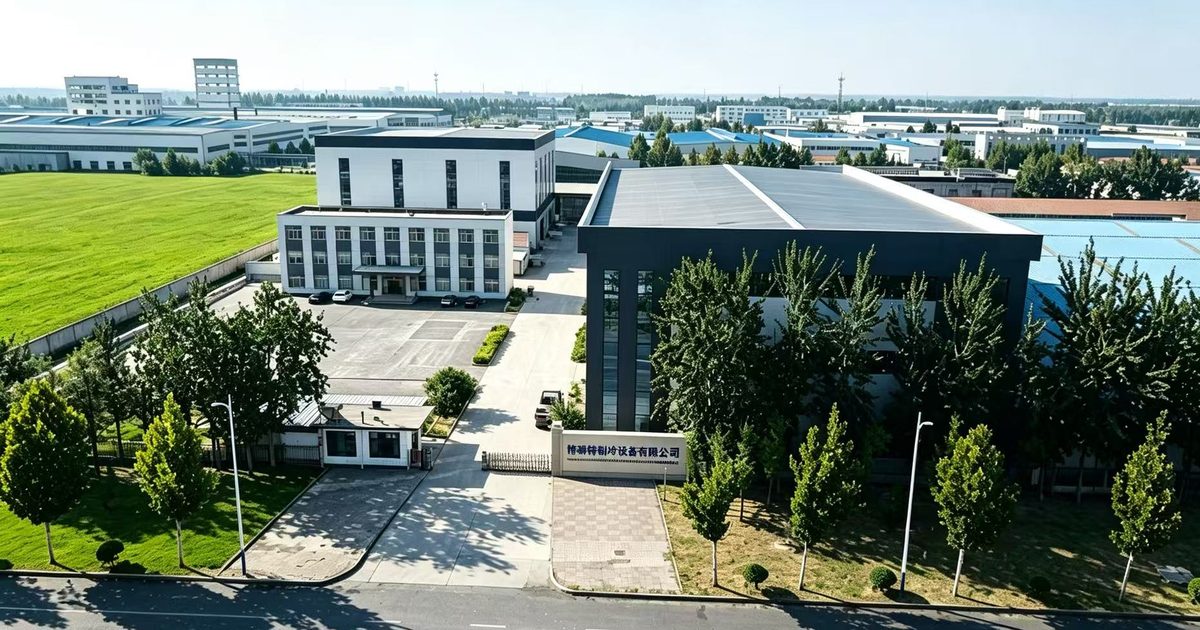
Shandong Boruite Refrigeration Equipment Co., Ltd. manufactures PU insulation panels and cold room doors in its own workshop in Boxing County, Binzhou, Shandong, China, and supplies design, equipment, installation and after-sales support for cold storage projects. For a project-specific spares list matched to your equipment schedule, contact +86 15898896999 or 3107900547@qq.com.
Send us the product, storage volume, target temperature and site conditions — our engineers will come back with a preliminary scheme and budget range within 24 hours.
Email us 15898896999