Cold Room Retrofit: Upgrading an Existing Freezer Room Without a Full Rebuild
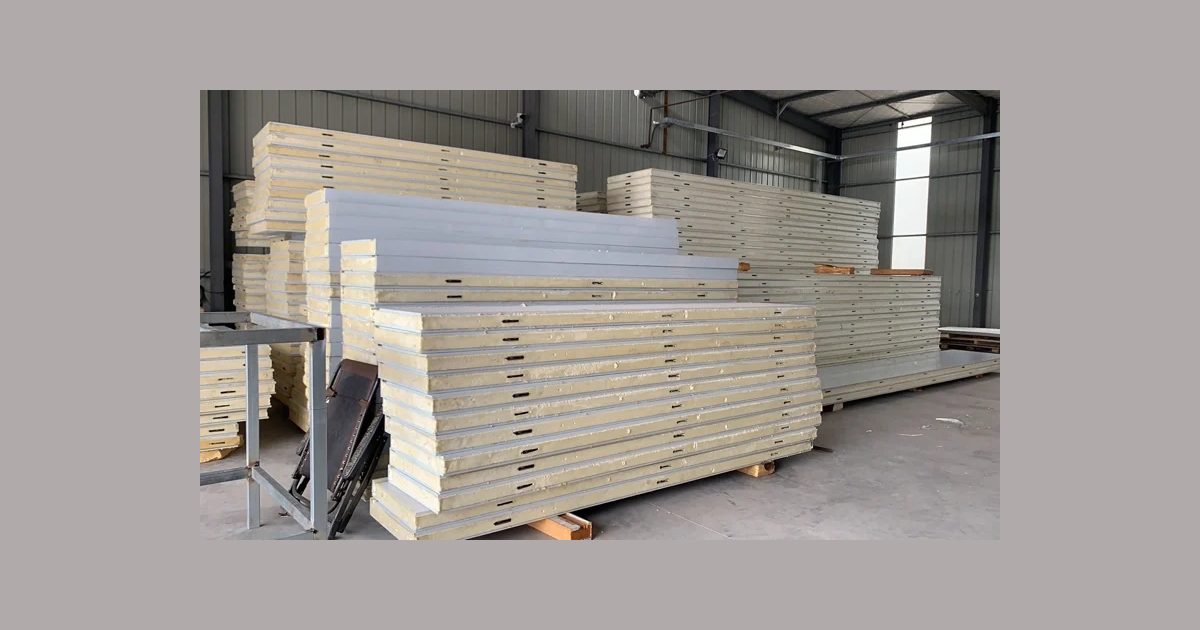
Most cold stores are not replaced, they are upgraded. The building stands, the floor slab is sound, the racking still fits, and the permits are already in hand — but the plant is fifteen years old, the electricity bill has doubled, spare parts take six weeks, and the refrigerant inside the system is either banned for new equipment or about to be. That is a retrofit project, and it behaves very differently from a new build.
The difference is that in a retrofit, most of the constraints are already fixed: panel thickness, door openings, ceiling height, slab insulation, pipe routes, electrical capacity. A supplier who quotes a retrofit from a photograph and a room dimension is guessing. This article sets out the sequence that keeps a retrofit from becoming a rebuild, and where money is usually wasted.
⚠️ The U-values, capacities and cost shares below are industry-typical reference figures for planning discussion only. Final values must be calculated for your actual room, climate, product and tariff — and every price must be replaced with your actual quotation before it goes to a customer.
First decide which layer you are replacing
A cold room is four systems stacked on top of each other: envelope, refrigeration plant, doors, controls. Retrofits go wrong when the buyer replaces one layer while blaming another. If the room cannot hold temperature because the panels are wet and the joints are open, a new condensing unit will simply run longer. If the plant is undersized, thicker panels will not create capacity.
| Retrofit level | What is replaced | Typical trigger | Downtime | Main risk |
|---|---|---|---|---|
| Envelope only | Panels, joint sealing, door seals, vapour barrier repairs | Condensation on walls, ice at joints, rising kWh with the same load | 3–10 days | Cold bridges left at the old steel and floor junction |
| Plant only | Condensing unit, evaporator, pipework, expansion valve, controls | Age, refrigerant phase-down, no spare parts, capacity short by 15–30 % | 2–5 days per system | New plant sized to the old, wrong evaporating temperature |
| Envelope + plant | Both, with a re-checked cooling load | Room is 10+ years old and the product mix has changed | 2–4 weeks | Phasing: product has nowhere to go during the changeover |
| Full refurbishment | Envelope, plant, doors, dock, monitoring, electrical | Change of use, GSP/GDP or retailer audit, capacity doubling | 3–6 weeks | Scope creep — it becomes a new build with a worse layout |
Decide the level before you ask for prices. A supplier quoting "a retrofit" without knowing which of these four you mean will either over-scope or under-scope, and both end in renegotiation.
Survey the room before anyone quotes
Six measurements decide whether a retrofit is even worth pricing. Take them yourself and put them in the RFQ — it shortens the quotation cycle and it removes the supplier's excuse for a vague number.
- Internal dimensions and clear height, measured, not read from a drawing. Rooms grow and shrink with racking and mezzanines.
- Panel thickness at an accessible edge — door reveal, a removed light fitting, a ceiling penetration. Note whether the core is PU, PIR or EPS, and whether it is wet.
- Floor build-up: is there an underfloor heater mat, and does it still work? If the slab has no heater and the room is a freezer, a retrofit cannot fix frost heave from above.
- Existing pipe routes and riser sizes, plus the distance and lift to the condensing unit position. This is what decides whether the new plant can reuse the old lines.
- Electrical supply: voltage, frequency, phase, breaker size, and whether the existing panel has spare ways for a new controller and heater circuit.
- Duty profile: product in and out per day, door openings per hour, target temperature and tolerance, and how many hours the room is actually open.
Engineering tip: Photograph the evaporator frost pattern before defrost, and the wall/floor junction after a defrost cycle. Wet insulation and a blocked drain both look like "the unit is too small" on the phone, and both are envelope problems that a bigger unit will hide for one more season.
The envelope: thickness is the easy part, joints are the problem
Buyers naturally focus on panel thickness, because it is the one number everyone quotes. It matters, but less than the joints, and a retrofit usually cannot change thickness anyway without changing doors, ceiling height and steel.
| Panel thickness (PU, λ ≈ 0.022 W/m·K) | Approximate U-value | Sensible use |
|---|---|---|
| 75 mm | ≈ 0.29 W/m²·K | Chilled rooms above 0 °C in mild climates |
| 100 mm | ≈ 0.22 W/m²·K | Chilled rooms, small freezers in moderate ambient |
| 120 mm | ≈ 0.18 W/m²·K | Freezer rooms, +30 °C ambient |
| 150 mm | ≈ 0.15 W/m²·K | Freezer rooms in hot climates, energy-sensitive sites |
| 200 mm | ≈ 0.11 W/m²·K | Low-temperature and blast rooms, severe ambient |
Doubling thickness from 100 mm to 200 mm roughly halves the transmission loss through the panels — and on a typical freezer room, transmission is often only 20–30 % of the total load. The rest is product load, infiltration and fan power. That is why "add 50 mm and save 30 %" is a claim worth testing rather than accepting.
What does pay back in a retrofit, almost every time:
- Resealing every joint and reinstating a continuous vapour barrier on the warm side. A 2 mm gap at a joint in a freezer wall will grow ice for years and quietly delaminate the panel from the inside.
- Fixing penetrations — pipe entries, cable glands, drain lines. Foam alone is not a vapour seal; it needs a mastic or boot detail.
- Replacing damaged panels at the dock corner, where forklifts hit. Local repair is a fraction of a full re-skin.
- Restoring door seals and heater wires before touching the plant. A hardened gasket on a busy door can cost more kWh than 50 mm of extra panel saves.
Keeping the box, replacing the plant
This is the most common retrofit and the one with the most expensive mistakes, because a new plant that is simply swapped in at the old duty inherits the old errors.
Evaporating temperature is the first decision, not the last. Capacity quoted at −5 °C evaporating is not transferable to −30 °C. Every 1 K lower evaporating temperature costs roughly 2–4 % more compressor power for the same cooling effect, so a plant chosen by "same kW as the old one" can be simultaneously oversized at design and unable to pull the room down after defrost.
Check the suction line, not just the compressor. A replacement refrigerant with different volumetric capacity and different mass flow needs the line re-checked for pressure drop and oil return. Oversized suction lines lose oil return at part load; undersized ones lose capacity. Neither shows up until the room is loaded.
| Refrigerant | GWP (AR4) | Temperature glide | Oil | Retrofit note |
|---|---|---|---|---|
| R404A | ≈ 3922 | Near-azeotropic | POE | Being restricted for new equipment in many markets; service availability declining |
| R448A | ≈ 1387 | ≈ 5–6 K | POE | Similar capacity; set superheat and controls on dew point |
| R449A | ≈ 1397 | ≈ 5–6 K | POE | Common R404A replacement; re-check TXV and charge weight |
| R452A | ≈ 2140 | ≈ 1.5 K | POE | Closer to R404A capacity; higher GWP |
| R22 (legacy) | ≈ 1810 | 0 | Mineral | Not a drop-in for any HFC blend — oil and elastomers must change |
Legacy R22 systems are the trap. R22 runs on mineral oil. A modern HFC or HFO blend needs POE, which lifts and removes mineral oil residues and can block driers and capillaries within weeks. A genuine conversion includes oil change, new filter driers, new seals, often new expansion valves, and a documented flush. A supplier who offers to "just regas it" is selling you a failure with a warranty argument attached.
US and EU compliance is a specification input, not a marketing line. In the EU, F-gas rules restrict placing new stationary commercial refrigeration with high-GWP refrigerants on the market; in the US, EPA SNAP lists acceptable refrigerants by application and DOE efficiency rules apply to some equipment classes. These are questions to put to your supplier in writing — ask which refrigerant they propose, its GWP, and which standard the unit will be listed to — rather than assuming any claim of compliance.
Engineering tip: Ask for the retrofit proposal at two evaporating temperatures, for example −8 °C and −10 °C, with kW, pipe sizes and annual kWh for both. If the supplier cannot produce the second column, they are quoting a catalogue unit rather than engineering your room, and the difference is usually 8–15 % of the electricity bill.
Doors, docks and the air that walks out
On a busy freezer, infiltration through openings is frequently the largest single load after product. Before spending on panels, count door cycles for one shift and watch what happens at the dock.
- Strip curtains are cheap and effective on low-traffic doors, and are destroyed by forklifts on high-traffic ones. On a busy dock they are often the most expensive "cheap" solution.
- Air curtains work when the nozzle is correctly sized for the opening height and the air is dry. A warm, humid climate and a wide opening will defeat a small unit, and the result is fog and ice at the threshold.
- Dock seals and shelters close the gap between trailer and wall. Without them, an open dock door in a freezer is an open window in winter, running all year.
- Fast doors with heated frames need their heater circuit checked at commissioning; a failed heater is an ice-locked door within days.
Engineering tip: Stand inside the freezer at the dock for two minutes with the door closed and the lights off. Any visible daylight, any continuous draught on your hand, or any ice line on the frame is infiltration you are paying for every hour of the year — and it is usually cheaper to fix than the plant upgrade you were about to buy.
Phasing: how to retrofit without stopping the business
Retrofits are usually scheduled around stock, not around the contractor. Three patterns work:
- Room-by-room changeover where multiple rooms share a plant: rebuild one room while the others carry the stock at reduced temperature margin.
- Temporary condensing unit on a rental or short-term purchase basis to hold the room while the main plant is replaced.
- Envelope-first, plant-second, with the product consolidated and the room taken out of service for the shortest possible window — usually the right sequence when the panels are wet, because drying and resealing cannot be done with the room in service.
Whichever you choose, write the acceptance test into the contract: a loaded pull-down and a 48-hour hold at target temperature with door cycles logged, not an unloaded "it runs fine" demonstration.
Where the money goes
⚠️ The shares below are planning ranges only — replace with your actual quotation.
| Cost block | Share of a plant-only retrofit | Share of a full refurbishment | Comment |
|---|---|---|---|
| Condensing unit and evaporator | ⚠️ 45–60 % | ⚠️ 25–35 % | Driven by kW at evaporating temperature, not by brand |
| Pipework, valves, refrigerant, labour | ⚠️ 20–30 % | ⚠️ 10–18 % | Rises steeply if routes must be re-run |
| Panels, doors, seals | ⚠️ 0–5 % | ⚠️ 30–45 % | Local repair beats full re-skin |
| Electrical and controls | ⚠️ 8–15 % | ⚠️ 10–20 % | Often the underestimated line |
| Commissioning, documentation | ⚠️ 3–6 % | ⚠️ 3–6 % | Do not accept a proposal that leaves this blank |
Retrofit or rebuild: a short decision table
| Condition | Retrofit is usually right | Rebuild is usually right |
|---|---|---|
| Slab and floor insulation | Sound, heater intact | Frost heave, failed heater, no repair access |
| Panel structure | Dry core, repairable damage | Wet core over large area, delamination, mould |
| Room dimensions vs product | Still fit the pallet and racking plan | Ceiling height or footprint blocks the volume you need |
| Refrigerant and plant | Replaceable within existing plant room | Plant room too small for the required condenser or rack |
| Compliance | Documentation can be produced | Audit requires a certified envelope and validated monitoring you cannot retrofit |
| Downtime tolerance | Days, phased | Weeks, with product relocated |
Specification checklist to send with the RFQ
- Measured internal dimensions, clear height, and panel thickness with core type.
- Target temperature, tolerance, and product entering temperature and daily tonnage.
- Door count, size, type, and openings per hour at peak.
- Ambient design condition (dry-bulb and humidity) for the condenser location.
- Refrigerant proposed, with GWP and the standard the unit will be listed to.
- Evaporating and condensing temperature assumed for the capacity quoted.
- Whether existing pipework is to be reused, and the suction line size offered.
- Electrical supply: voltage, frequency, phase, available breaker capacity.
- Defrost method, drain route and where the condensate goes.
- Phasing plan, shutdown windows, and the acceptance test to be signed off.
Send this list and the quotations you get back will be comparable. A retrofit is not won by the cheapest unit; it is won by the supplier who surveys the room, keeps the parts that are still good, and tells you honestly which parts are not.
Shandong Boruite Refrigeration Equipment Co., Ltd. manufactures PU insulation panels and cold room doors in its own workshop in Boxing County, Binzhou, Shandong, China, and supplies design, equipment, installation and after-sales support for cold room projects. For a retrofit enquiry, send measured dimensions, photos of the wall and floor junctions, and your target temperature — phone +86 15898896999, email 3107900547@qq.com.
Send us the product, storage volume, target temperature and site conditions — our engineers will come back with a preliminary scheme and budget range within 24 hours.
Email us 15898896999