Walk-in Cooler vs Cold Room vs Freezer Room: Which One Should You Actually Buy
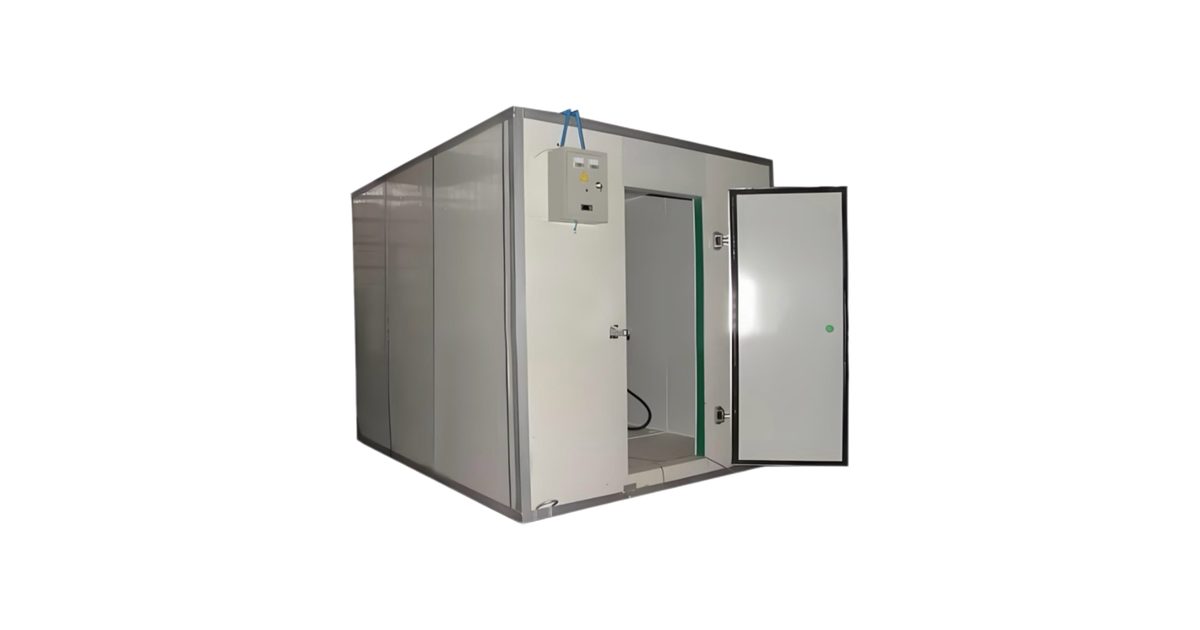
Ask three suppliers to quote a "cold room" and you will often get three different machines back: a chiller built for +2 °C, a freezer built for −18 °C, and sometimes a modular walk-in cooler that was never designed for the duty you described. The words sound interchangeable in trade conversations, but in engineering terms a walk-in cooler, a general cold room and a freezer room differ in panel specification, floor construction, evaporator design, defrost strategy and — most visibly in your quotation — refrigeration capacity per cubic metre. Choosing the wrong category is one of the most expensive mistakes a first-time buyer makes, because the error usually surfaces only after commissioning, when the room cannot pull down to temperature in a tropical summer.
This article separates the three room types the way a refrigeration engineer does, then gives you a selection checklist you can apply to your own project before requesting quotations.
The short version
| Question | Walk-in cooler | Cold room (chiller) | Freezer room |
|---|---|---|---|
| Typical temperature | 0 to +8 °C | −5 to +10 °C, most often +2 to +4 °C | −18 to −25 °C (blast rooms go lower) |
| Typical size | Small, 5–40 m³, often bought as a kit | Medium to large, 20–2,000 m³ | Medium to large, 30–2,000 m³ |
| Panel thickness (PU) | 75–100 mm | 100–150 mm | 150–200 mm |
| Floor | Prefabricated floor panels or existing slab | Reinforced insulated slab for heavy loads | Insulated slab + under-floor heating (frost heave protection) |
| Evaporator | Compact ceiling unit, no or simple defrost | Air cooler, electric or water defrost | Air cooler with frequent defrost (electric or hot gas), fin spacing wider |
| Door | Hinged, sometimes with window | Sliding or hinged, heated frame optional | Sliding or hinged, heated door frame and gasket standard |
| Relative equipment cost | Lowest per m³ | Moderate | Highest per m³ — commonly 1.5–2.5× a chiller of the same volume |
| Typical products | Beverages, dairy, fresh produce in retail | Fruit, vegetables, eggs, processed food | Frozen meat, seafood, ice cream, frozen prepared meals |
⚠️ Cost ratios and temperature bands here are industry reference values for orientation only. Actual pricing depends on volume, ambient conditions, brand selection and freight — always replace them with your actual quotation.
Where the walk-in cooler fits
A walk-in cooler is, strictly speaking, a small chiller room. The term is most used in retail, hospitality and food-service contexts: a restaurant, supermarket back room, or convenience store distribution point needs a refrigerated space a person can walk into, and buys it as a semi-standardised kit — panels, hinged door, one condensing unit, one evaporator, pre-charged piping or quick-connect fittings.
The economics of a walk-in cooler are driven by standardisation. Because the sizes repeat, panel cutting is efficient and equipment selection is nearly off-the-shelf. If your requirement falls in the 5–40 m³ band at 0 to +8 °C, asking suppliers for a standard walk-in cooler kit will almost always be cheaper than asking them to engineer a bespoke room of the same size.
Three checks before you order a walk-in kit:
- Ambient allowance. A kit designed for a 25 °C European kitchen will be undersized at 38 °C in the Gulf or South Asia. Ask the supplier to size the condensing unit at your actual summer design ambient, not a catalogue default.
- Door duty. In food service the door may open fifty times a day. Frequent door traffic raises the infiltration load far above the "2–3 door openings per hour" most kit calculations assume. Tell the supplier your real traffic.
- Floor loading. Prefabricated floor panels for walk-ins are typically rated for pedestrian and hand-trolley traffic. If you will run a pallet truck on them, you need a reinforced floor or a site concrete slab over insulation — a different product, not an upgrade on the same one.
Engineering tip: When comparing walk-in cooler quotations, check whether the quoted capacity was calculated at the *same* evaporating temperature and ambient temperature. A unit quoted at −5 °C evaporating on a 25 °C ambient looks cheaper and smaller than the correct selection at +2 °C evaporating on a 40 °C ambient — and the difference shows up as a room that never reaches setpoint in summer. Ask every supplier to state both temperatures on the quotation line.
Where the general cold room fits
"Cold room" in most export projects means a mid-to-large chiller for fresh produce, dairy, eggs or chilled processed food, held somewhere between 0 and +8 °C. Compared with a walk-in kit, a project cold room differs in scale, structure and engineering:
- Structure. Panels are assembled on a prepared concrete slab, spans are larger, and corner, T-panel and flat-panel configurations are designed around the building's actual dimensions rather than a catalogue module.
- Load calculation. The refrigeration load includes product pulldown (cooling tons of produce from field temperature to storage temperature), respiration heat from living produce, infiltration, equipment and people loads. Respiration heat alone is negligible in a walk-in cooler and dominant in a fruit store.
- Airflow design. Long-throw ceiling evaporators, ducted discharge air or multiple smaller units are selected to reach every pallet position without blowing directly onto sensitive products.
- Controls. Digital controllers with staged capacity, possibly two compressors or VRF-style multiplexed racks for partial-load efficiency.
If you are storing fruit or vegetables for more than a week, also read our article on controlled atmosphere storage — for apples and pears in particular, a plain cold room and a CA room are different investments.
Where the freezer room is different in kind, not just degree
The most common buyer error is treating a freezer room as "a cold room set colder". The differences are structural:
| Design element | Chiller (+2 °C) | Freezer (−18 to −25 °C) | Why it matters |
|---|---|---|---|
| PU panel thickness | 100–150 mm | 150–200 mm | At −18 °C the heat gradient is much larger; thin panels waste energy and cause surface condensation |
| Vapour barrier and sealing | Standard sealant | Attention to every joint and penetration | Moisture ingress into panels at freezer temperatures forms ice inside the panel core |
| Floor | Insulated slab | Insulated slab + heating cable or ducts under the slab | Ground frost heave will lift and crack the floor within one or two years if the sub-soil freezes |
| Evaporator fins | Standard spacing | Wider fin spacing | Frost builds fast; narrow fins block within hours |
| Defrost | Occasional electric | Frequent electric, water or hot gas, with defrost termination by temperature *and* time | Failed defrost in a freezer escalates to iced coils and lost capacity within a day |
| Door frame | Optional heater | Heated frame, heated gasket, strip curtain or air curtain standard | Doors freeze shut; gaskets tear; infiltration ice forms at the threshold |
| Pressure relief | Not required | Heated pressure relief valve/port | Every door opening pumps warm moist air in; the room must equalise pressure or panels stress |
If you plan a freezer directly on a concrete slab in contact with the ground, the under-floor heating system is not optional equipment — it is the difference between a floor that lasts twenty years and one that heaves. Our article on floor insulation and frost heave covers the details.
Engineering tip: For freezer rooms, always ask the supplier to show the defrost schedule in the commissioning documents — number of defrosts per day, method, termination criterion and drain-line heating. A freezer quoted without drain heaters and heated pressure relief ports is missing two of the most common failure points, and those omissions rarely show as a price difference until the first winter.
Pulldown versus holding: the load question that decides everything
A further distinction that separates the three categories is whether the room must pull product down to temperature or merely hold it:
- A holding room receives product already at storage temperature (e.g. frozen goods arriving in a reefer container, transferred into your freezer). Its load is dominated by transmission, infiltration and equipment heat. Capacity per cubic metre is comparatively low.
- A pulldown room receives warm product (e.g. fresh fish into a freezer). The refrigeration system must remove field heat within a specified time — for fish, meat and prepared meals this often means a blast freezer or blast chiller, which needs roughly three to five times the capacity of a holding room of the same volume.
If you tell a supplier "we need a −18 °C room, 100 m³" without saying whether fresh product ever enters it warm, you will get a holding-duty quotation, and the first warm delivery will sit there for two days slowly pulling the whole room up. State the pulldown requirement explicitly: product entry temperature, mass per batch, and the time within which it must reach storage temperature.
Matching room type to your business
| Your situation | Sensible choice | Notes |
|---|---|---|
| Restaurant / hotel / small retail back-of-house | Walk-in cooler kit, 0 to +8 °C | Standardised, fastest delivery |
| Wholesaler storing fresh produce for days-to-weeks | Chiller cold room, +2 to +4 °C | Specify respiration load for fruit and vegetables |
| Importer / distributor of frozen meat or seafood | Freezer room, −18 to −25 °C, holding duty | Confirm product arrives already frozen |
| Processor freezing own production | Blast freezer or blast room + holding freezer | Two rooms, two duties — budget for both |
| Apple / pear long-term storage | CA cold room | See our CA storage article for the gas-tight envelope |
| Pharmacy / clinic 2–8 °C stock | Pharmaceutical cold room | Mapping, alarms, redundancy — a separate specification |
Five questions to answer before you request a quotation
Whichever category you end up in, bring these answers to the table and the quotations you receive back will be comparable and buildable:
- Setpoint and product. Temperature band, product type, and whether product enters warm (pulldown) or cold (holding).
- Internal dimensions and daily turnover. Room size, racking or floor stacking, and tons in / tons out per day.
- Ambient conditions. Summer design temperature at the site, and whether the condensing units will sit outdoors, in a plant room, or on a roof.
- Utilities. Power supply voltage and phase (380–415 V / 3 ph is typical for freezer duty), water availability if water defrost is proposed.
- Local rules. Refrigerant restrictions, electrical certification and pressure-vessel inspection requirements in your country — these affect which condensing units can legally be installed, not just which ones are cheap.
Send the same five answers to every supplier. Then compare the quotations line by line — panel thickness and fire rating, evaporating temperature used for unit selection, defrost method, floor construction, door heater inclusion, and warranty terms.
How we can help
Shandong Boruite Refrigeration Equipment Co., Ltd., based in Boxing County, Binzhou, Shandong, China, manufactures PU insulation panels and cold room doors in its own workshop and supplies complete cold room projects — chiller rooms, freezer rooms, blast freezers and CA storage — including design, equipment supply, installation guidance and after-sales service. If you are deciding between room types for a specific project, send us your five answers from the checklist above and we will come back with a specification and quotation sized for your actual conditions. Contact: phone/WhatsApp +86 15898896999, email 3107900547@qq.com.
Send us the product, storage volume, target temperature and site conditions — our engineers will come back with a preliminary scheme and budget range within 24 hours.
Email us 15898896999